
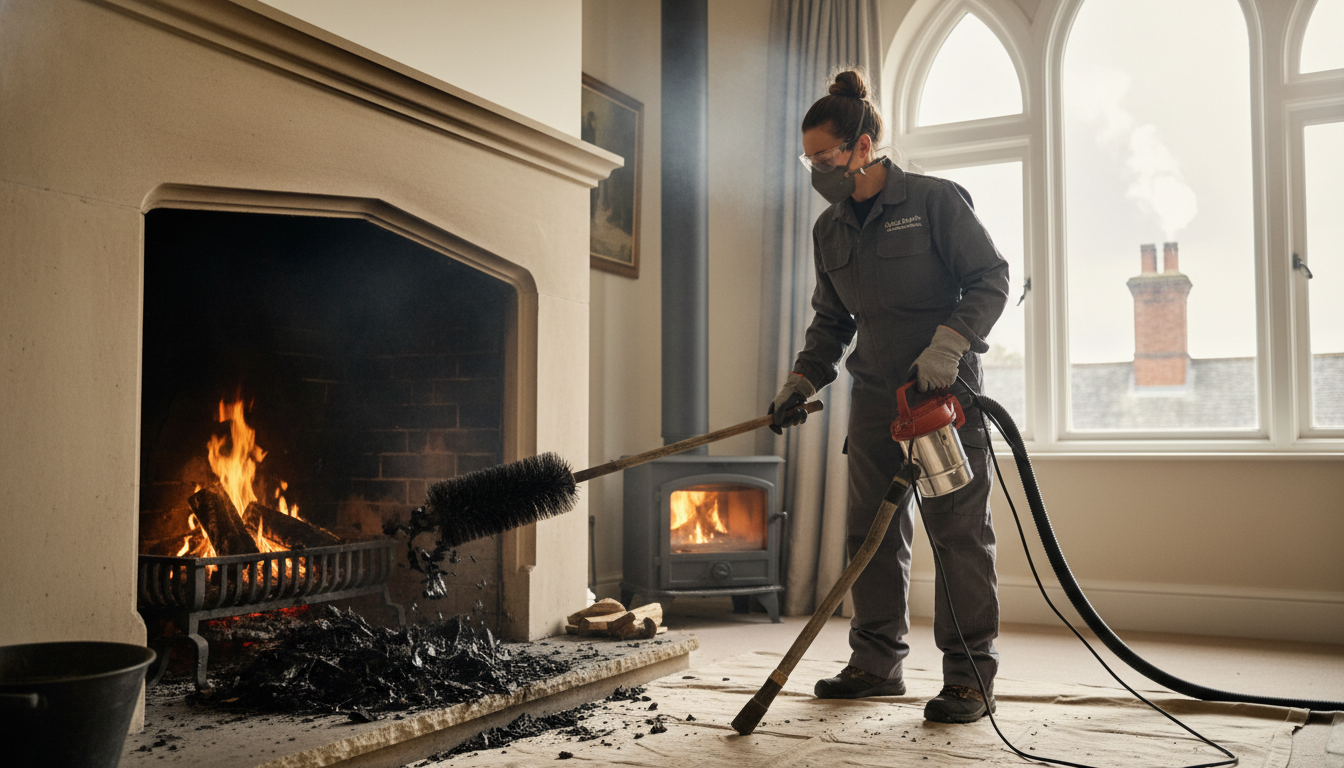
Welcome! If you enjoy the cozy warmth of a wood-burning fireplace, you’ve come to the right place. This guide is all about keeping that wonderful heat source safe and efficient for your home.
When you burn wood, a sticky, tar-like residue builds up inside your chimney. This stuff is called creosote. It might not seem like a big deal, but it can create a serious fire hazard if it’s not handled properly.
Understanding this buildup and knowing how to manage it is key to peace of mind. Regular cleaning is not just a suggestion—it’s essential for your family’s safety and the performance of your heating system.
We’ll walk you through everything you need to know. You’ll learn about important safety steps, simple do-it-yourself solutions, and when it’s smart to call a professional. With the right approach, you can tackle this task confidently.
Our goal is to make what might seem like intimidating stuff feel totally manageable. Let’s get started on keeping your home safe and warm!
Understanding Creosote and Its Hazards
To keep your home safe, it’s crucial to understand what you’re dealing with inside your chimney. This knowledge is the first step toward effective prevention.
What is Creosote?
When you burn wood, the smoke contains vapors that cool down as they travel up the flue. These vapors condense on the interior walls, forming a sticky, tar-like substance. This buildup starts as flaky soot but can harden into a dangerous, glazed layer over time.
Cooler flue temperatures and inefficient fires cause heavier accumulation. This means the top of your chimney, being farthest from the heat, often has the most significant deposits.
Potential Health and Fire Risks
The fire hazard is the most immediate concern. This material is highly flammable. If enough accumulates, a single spark can ignite a serious chimney fire that may spread to your home.
Health risks are another critical factor. Inhaling the particles or fumes can irritate your lungs and skin. Prolonged exposure might lead to more significant respiratory problems. Recognizing these dangers highlights why regular inspection is so important for your family’s well-being.
Safety Preparations for Creosote Removal
Before you roll up your sleeves to tackle chimney buildup, your top priority should be creating a safe environment. This substance can irritate your eyes, skin, and lungs. People with sensitivities need extra caution.
Wearing Protective Clothing and Gear
Your clothing choice matters for this job. Thick jeans and a long-sleeved shirt prevent direct skin contact. Rubber gloves protect your hands from the sticky material.
Don’t forget eye and respiratory protection. Non-ventilated safety goggles shield your eyes from particles. A quality face mask reduces inhalation risk. These simple things make a big difference.
Setting Up a Ventilated and Protected Work Area
Proper ventilation is crucial for your safety. Open windows on all sides of your house. This creates cross-ventilation that carries fumes outdoors.
Protect your home from mess and stains. Lay down plastic sheets or tarps around your workspace. This prevents soot from damaging carpets and furniture.
Gather all necessary things before starting. Have your protective gear ready. Keep cleaning supplies and any remover products within reach. Good lighting helps you see clearly. Having someone nearby can help if needed.
Taking these steps ensures your work goes smoothly. Your family’s safety is worth the extra preparation time.
Creosote Removal: Step-by-Step Process
The secret to tackling stubborn fireplace buildup lies in your kitchen pantry. With a few common ingredients, you can create a powerful cleaning paste that breaks down even the toughest deposits.
Preparing the Cleaning Solution
Start by mixing equal parts salt and dish liquid in a bowl. Use finely granulated salt for its gentle abrasive quality. Add a half cup of ammonia to complete your mixture.
Stir until you achieve a thick paste consistency. This texture works better than a runny liquid for clinging to vertical surfaces. The paste will penetrate deeply into the buildup.
Application and Scrubbing Techniques
Apply the paste generously to all affected areas using a brush or gloved hand. Ensure complete coverage where you see the dark material. Let it sit for at least 15 minutes.
For heavier deposits, extend the waiting time to 30-45 minutes. This allows the solution to work its magic on stubborn layers.
Now comes the scrubbing phase. Use steel wool or a stiff brush with circular motions. This technique helps loosen material that the paste didn’t fully penetrate.
After scrubbing, spray the area thoroughly with cold water from a spray bottle. The water soaking action helps lift away the loosened residue. Wipe clean with towels until all paste and buildup disappears.
This method requires some elbow grease but delivers excellent results. Patience and persistence are your best tools for a spotless fireplace.
DIY Cleaning Solutions and Tools
Having the right tools and a simple, effective cleaning solution makes the job of maintaining your fireplace much more manageable. You don’t need a garage full of specialty equipment. Many effective items are probably already in your home.
Mixing an Abrasive Paste with Salt and Dish Liquid
Creating your own powerful cleaner is straightforward. Combine equal parts of finely granulated salt and dish liquid in a bowl. Add a half cup of ammonia to complete the mixture.
Stir it into a thick paste. This consistency helps it stick to vertical surfaces inside your flue. The fine salt provides just the right amount of gentle abrasion.
It works to loosen deposits without causing damage. Coarse salt is too harsh for this delicate work.
Choosing the Right Brushes, Steel Wool, and Other Tools
The right tools make all the difference. For scrubbing, you have excellent options.
- Stiff-bristled brushes: A good scrub brush or a specialized chimney brush works the paste deep into the buildup.
- Steel wool: For tough spots, medium-grade steel wool is perfect. It offers strong scrubbing power without being overly abrasive.
- Spray bottle: A simple spray bottle filled with cold water is essential for rinsing the area after scrubbing.
Other handy things include a bucket for mixing, drop cloths, and a scraper for loosened bits. While store-bought remover powder exists, this homemade paste saves money and works remarkably well.
Post-Cleaning Maintenance and Preventive Measures
After you’ve put in the hard work to clean your chimney, a few smart habits can keep it safer for longer. Consistent upkeep is your best defense against future problems.
Sometimes, one cleaning session isn’t enough. If heavy buildup remains, don’t hesitate to reapply your paste. For ongoing care, consider commercial chimney cleaning logs. They can help manage deposits between manual cleanings.
Fueling for a Cleaner Burn
The wood you burn makes a huge difference. Always use dry, seasoned wood. Green or wet wood creates more smoke and leads to faster buildup.
Proper storage is key. Let your wood season for at least six months. Keep it in a dry, covered spot. This simple step ensures a hotter, cleaner fire.
When to Seek Professional Help
While DIY is great, some jobs need an expert. Call a pro if you see glazed, tar-like deposits. Also seek help if you’re uncomfortable on a ladder or have health concerns.
Building a relationship with a trusted chimney sweep is wise. They can be a great friend for annual check-ups. This ensures your entire flue system is safe.
Regular maintenance protects your home and improves your fireplace‘s efficiency. It’s the best way to enjoy cozy nights worry-free.
Conclusion
Taking charge of your fireplace maintenance brings peace of mind and cozy winter nights. You now have the knowledge to tackle this important work safely and effectively.
Remember that safety comes first every time. Wear proper gear and take your time with the cleaning process. The simple salt and dish liquid paste works wonders when given enough minutes to penetrate.
Proper scrubbing with a good brush or steel wool, followed by a water spray, removes the stubborn stuff. Burning dry wood creates less soot and keeps your flue cleaner.
If you have questions or face a tough problem, don’t hesitate to call a pro. Regular care protects your home from fire hazards. Enjoy your fireplace with confidence!




0 Comments