
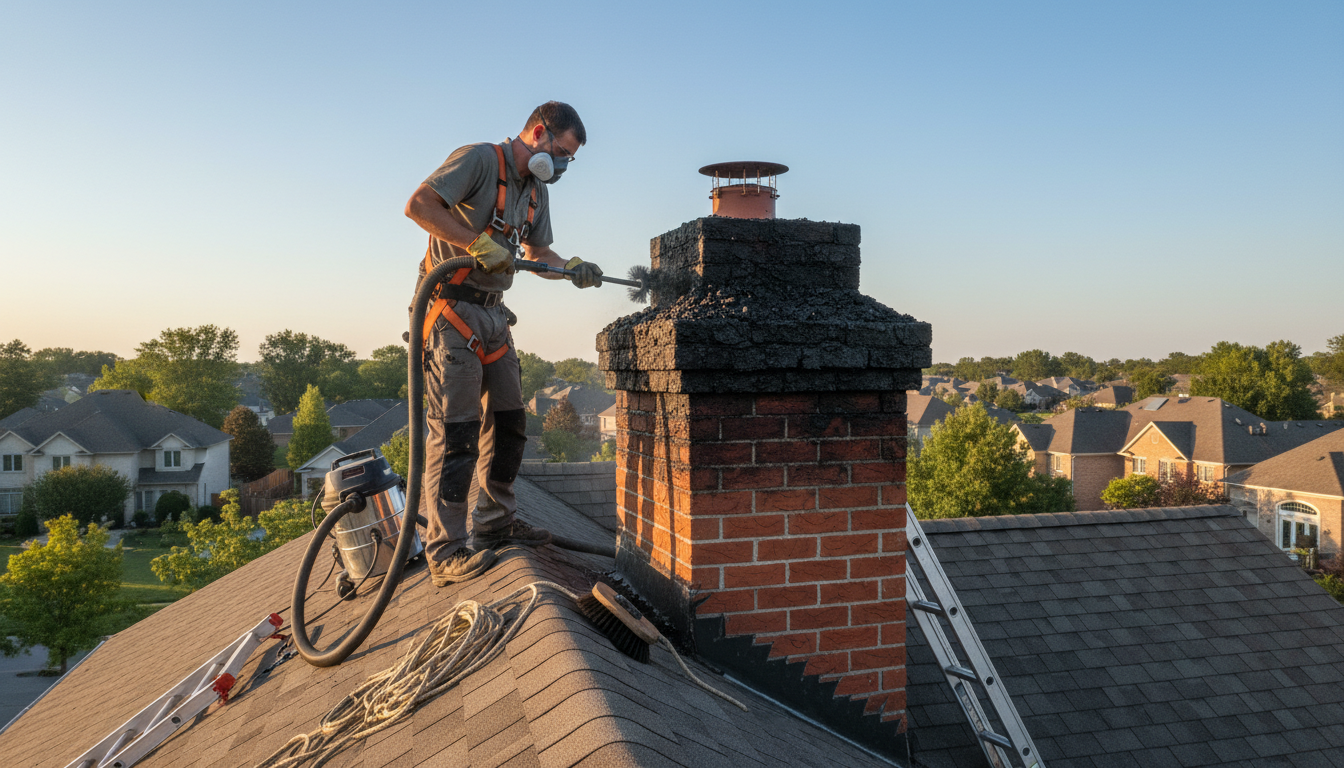
Welcome to your complete guide on maintaining a safe and efficient heating system. If you enjoy cozy nights by the fireplace, proper maintenance is essential for your family’s safety.
This guide focuses on a critical aspect of chimney care that many homeowners overlook. Regular upkeep goes beyond simple ash removal.
When you burn wood in your fireplace, a natural byproduct called creosote forms inside the flue. This sticky substance builds up over time from condensation during combustion.
Understanding this buildup is crucial because it can become a serious fire hazard if left unchecked. Proper management protects your entire home and everyone in it.
We’ll walk you through everything from identifying creosote buildup to practical maintenance techniques. Whether you prefer DIY approaches or professional services, this knowledge empowers you to make informed decisions.
Don’t worry if chimney care seems complicated. Our friendly guide breaks it down into simple, manageable steps that anyone can follow.
You’ll learn safety precautions, effective methods, and ongoing tips to keep your heating system running smoothly all year. Let’s begin this important journey toward a safer, more efficient home.
Understanding Chimney Creosote and Its Dangers
The comforting glow of a wood fire comes with an important responsibility that every homeowner should understand. When you enjoy your fireplace or wood stove, a natural process occurs that requires your attention.
What is Creosote?
This dark, tar-like substance forms when wood and other fuels undergo incomplete combustion. As smoke and gases travel up your flue, they cool and condense, leaving sticky deposits on the interior walls.
The buildup progresses through three distinct stages. First-degree appears flaky and is relatively easy to remove. Second-degree becomes tar-like and more challenging. Third-degree forms a hardened glaze that’s extremely dangerous to address.
Health and Safety Hazards
Exposure to this combustible material can irritate your eyes, skin, and respiratory system. People with sensitivities or preexisting conditions may experience more severe reactions.
The fire danger is equally concerning. This highly flammable substance can ignite within your heating system, causing dangerous fires that may spread throughout your home. Regular inspection helps prevent these risks.
Preparing Your Home for Chimney Creosote Cleaning
A well-prepared workspace is your first step toward effective and safe fireplace maintenance. Taking time to set up properly prevents messes and protects your family.
Good preparation makes the entire process smoother. It also reduces risks associated with this important home maintenance task.
Setting Up a Safe Workspace
Begin by protecting your floors and furniture. Lay down plastic sheets or tarps around your work area.
This simple step prevents soot and residue from staining carpets and surfaces. Cover anything near your fireplace that could get dirty.
Proper ventilation is equally important. Open windows on opposite sides of your home to create cross-ventilation.
This allows fumes to escape outdoors safely. Good airflow protects your lungs during the cleaning process.
Protective Gear and Ventilation Tips
Wear thick clothing like jeans and long-sleeved shirts. This prevents skin contact with irritants.
Add rubber gloves, sealed goggles, and a quality face mask. This gear protects you from particles that can affect your health.
Always read safety instructions when using chemical products. Keep the area well-ventilated throughout your work.
Avoid any open flames until the job is completely finished. These precautions ensure your home stays safe during maintenance.
Chimney Creosote Cleaning: Expert Techniques
When tackling fireplace residue, homeowners have two primary paths to consider: commercial products or DIY solutions. Both approaches can effectively address buildup depending on your situation and comfort level.
Chemical Methods vs. Homemade Solutions
Commercial products like RUTLAND Creosote Remover work remarkably well. Add one scoop to a hot fire 1-2 times weekly. This transforms sticky residue into brushable ash over time.
Heat activates these chemical cleaners effectively. Apply them to a hot bed of coals for best results. The vapors help dry and detach deposits in your flue.
For a natural approach, try homemade solutions. Vinegar works as an excellent acid-based option. It breaks down buildup when applied directly.
Create a powerful cleaning paste using equal parts salt and dish liquid. Mix with a half cup of ammonia. The salt provides gentle abrasion for tough spots.
Tools and Techniques from the Field
Professionals recommend specific tools for optimal results. Chimney wire brushes effectively clean the flue interior. Steel wool or stiff brushes work well for scrubbing.
Some experts prefer wet base cleaners. These break up small pieces more effectively. Always check for blockages as residue loosens and falls.
Step-by-Step Cleaning Process
Apply your chosen paste to all affected areas. Let it sit for 15-45 minutes depending on buildup thickness. This allows proper penetration.
Scrub in circular motions using your brush or steel wool. Rinse thoroughly with water afterward. Wipe the area clean once finished.
For stubborn deposits, you might need repeated applications. Alternative methods include diluted bleach solutions. Always protect surrounding surfaces from damage.
Maintaining a Safe and Efficient Chimney
Smart maintenance habits can dramatically reduce the risks associated with wood-burning appliances. While you cannot completely eliminate residue when enjoying your fireplace, you can significantly minimize the amount that forms.
Routine Maintenance and Prevention
Establishing a consistent care schedule is essential for safety. Regular inspections help you monitor the degree of residue accumulation in your flue system.
Check the top of your structure monthly during burning season. Look for any blockages or visible buildup. This simple habit takes little time but provides valuable peace of mind.
Even when using commercial removal products, professional cleaning remains necessary. Schedule thorough inspections at least once per year for optimal safety.
Tips to Reduce Future Buildup
Your choice of fuel makes a huge difference in residue formation. Always use well-dried, seasoned wood for burning. Logs with high moisture content dramatically increase sticky deposits.
When lighting your appliance, open the flue completely for several minutes. This allows for hotter, more complete combustion. The result is less condensation and fewer tar-like substances.
Hotter fires produce less residue because wood burns more efficiently. Proper airflow not only reduces buildup but also improves heating performance. You’ll save money on fuel over time while keeping your home safer.
Conclusion
Your journey toward a safer, more efficient home heating system is nearly complete. Remember, the dark substance that forms in your flue demands regular attention. A small amount of effort now prevents devastating fires later.
Whether you tackle the task yourself or hire experts, the goal is the same. Keep your fireplace or wood stove free from dangerous buildup. This simple habit protects your entire home.
If you feel unsure about the degree of buildup, especially at the top of the structure, call a professional. They have the right tools and knowledge to handle soot and residue safely. Your peace of mind is worth it.
You now have the knowledge to take control. A well-maintained system provides warmth and comfort for years to come. Enjoy your fireside moments with confidence.



0 Comments