
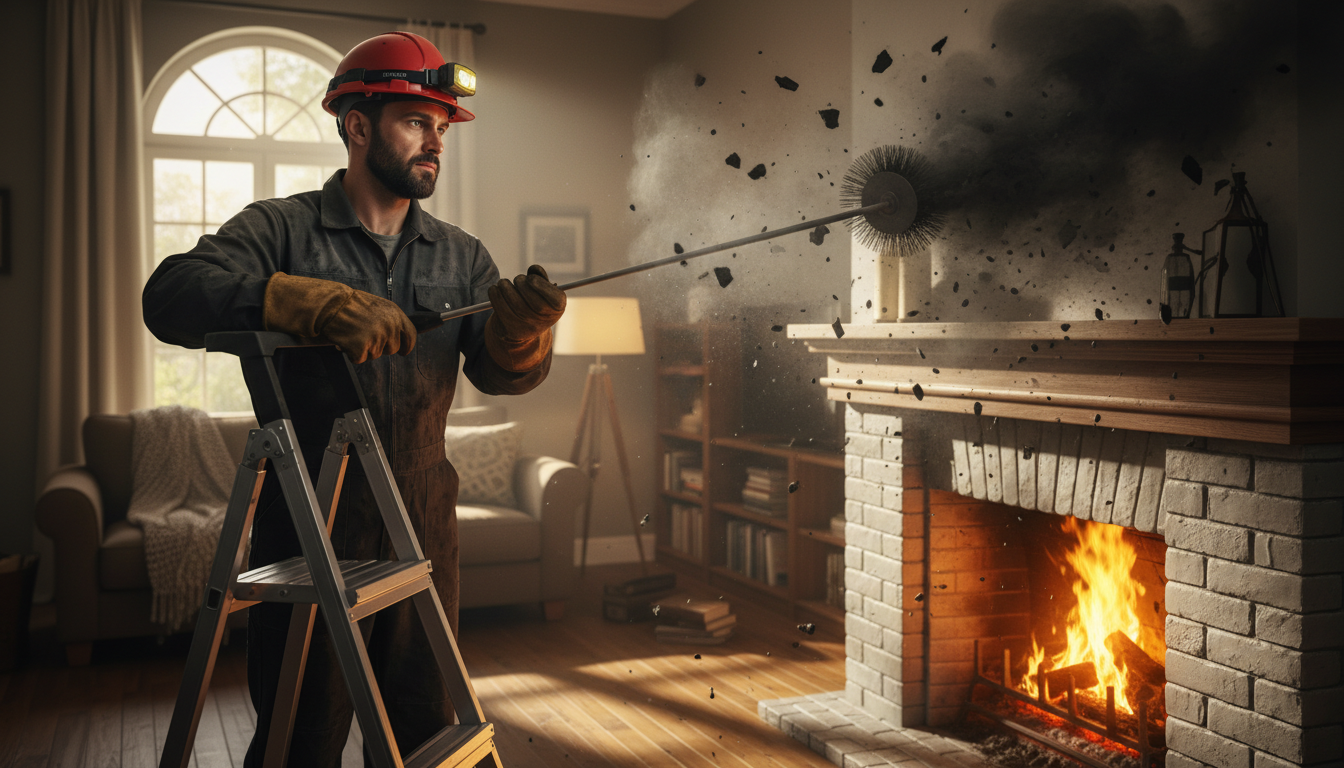
Welcome! If you own a fireplace, you know the cozy comfort it brings. Keeping that warmth safe and efficient is our goal. This guide is your friendly helper for achieving a pristine hearth.
That black powder around your hearth is more than just a mess. It’s a sign of a potential safety problem. Combustion deposits can build up in key areas and then fall into the firebox.
Ignoring this buildup is risky. This guide will walk you through understanding the issue and the best cleaning methods. We cover everything from simple DIY steps to knowing when to call a pro.
Whether you’re a new owner or a seasoned expert, you’ll find valuable tips here. Our aim is to help you maintain a safe and efficient fireplace system for your home.
Let’s get started on the path to a cleaner, safer hearth. You’ll learn practical ways to tackle that stubborn soot and enjoy peace of mind.
Understanding Soot: Risks and Warnings
Many homeowners wonder about the dark material that builds up after fires. This substance isn’t just ordinary dust—it’s a byproduct of incomplete combustion that requires proper understanding.
What Is Soot and How It Forms?
When organic fuels like wood don’t burn completely, smoke carries unburned carbon particles. These particles stick to surfaces as powder, flakes, or oily residue.
This substance differs from creosote, which contains sticky tars. Both materials accumulate from burning wood but have distinct properties and risks.
The Dangers of Soot Buildup and Health Implications
Black soot poses serious health threats as both an inhalation hazard and skin irritant. Exposure can lead to respiratory issues and other medical concerns.
The fire risk becomes critical when buildup reaches ⅛-inch thickness. This accumulation can ignite, damaging flue liners and potentially spreading to your home’s structure.
Incomplete combustion also produces carbon monoxide—an invisible, odorless gas. Stains on your fireplace mantle serve as visible warnings of potential drafting problems.
Chimney Soot Cleaning: Expert Techniques for a Safer Home
Expert techniques for fireplace maintenance offer peace of mind that DIY methods simply cannot match. Professionals bring specialized knowledge to every job.
Why Professional Service Can Be Crucial
Trained specialists use advanced equipment like rotary brushes and power sweepers. These tools reach areas that homeowners might miss.
Video inspection systems let technicians monitor the process in real time. This ensures complete removal of all deposits.
Annual professional maintenance dramatically reduces fire risks. It also keeps your system operating at peak efficiency.
Tips for Safe and Effective Cleaning
Never attempt to burn deposits out with fire. This dangerous practice can cause uncontrolled blazes and structural damage.
Experts adapt their methods to your specific situation. They understand different system intricacies without causing harm.
Professional services save homeowners valuable time. They also spot potential problems that untrained eyes might miss.
This prevents costly repairs down the line. Skilled technicians provide thorough, safe results every time.
Preparation and Tools for an Effective Cleaning
Proper preparation makes any cleaning task more efficient and safer for everyone involved. Having the right equipment on hand before you start ensures a smoother process and better results.
Choosing the Right Cleaning Solutions and Mixtures
Selecting the proper cleaning solution is crucial for effective maintenance. You can choose commercial cleaners specifically designed for fireplace residues.
For lighter tasks, a simple mixture of warm water and dish soap often works well. Always test your solution on a small area first to ensure it won’t damage surfaces.
Eco-friendly cleaners are increasingly popular options. These break down residues effectively without harsh chemicals that could harm your family.
Essential Tools: Brushes, Vacuums, and Safety Gear
Safety should always come first. Wear heavy-duty gloves to protect your hands from residues and cleaners. A dust mask prevents inhaling particles, while safety goggles shield your eyes.
For reaching high areas, use a sturdy step stool or ladder. Work slowly and reposition frequently to prevent falls.
Choose the right brush for each task. A stiff-bristled scrub brush tackles tough residues on brick surfaces. Specialized brushes reach into flues and tight spaces.
A shop vacuum with HEPA filtration captures fine particles effectively. This prevents them from circulating back into your home’s air.
Step-by-Step Guide to Removing Soot and Residue
Getting your fireplace sparkling clean requires a systematic approach that prioritizes safety first. Following these steps will help you effectively tackle that stubborn black buildup while keeping your home protected.
Initial Assessment and Safety Measures
Always begin with a thorough safety check. Make sure the fireplace is completely cool to the touch before starting any work. Open windows for proper ventilation throughout the process.
Wear protective gear including gloves, goggles, and a dust mask. Remove all ashes from the firebox using a metal scoop. Never assume old ashes are completely cold.
Detailed Cleaning Instructions for Fireplaces and Chimneys
Apply your chosen cleaning solution to affected areas, working from top to bottom. This prevents clean surface areas from getting re-soiled. Test a small spot first with a damp sponge.
For brick surfaces with heavy soot stains, let the solution sit for 5-10 minutes. This breaks down the grease and carbon deposits. Use circular motions when you scrub.
Persistent stains may require multiple applications and some elbow grease. Wipe away loosened residue with a clean cloth or sponge. Rinse frequently in fresh water.
Tackle the firebox methodically, scrubbing all interior surfaces. For tough soot stains on bricks, create a paste with your cleaning solution. Finish with a final rinse using clean water.
Maintenance and Prevention Strategies for Your Chimney
A well-maintained hearth system provides reliable comfort while minimizing potential hazards in your living space. Establishing consistent care routines ensures your fireplace operates efficiently for many years.
Preventing Soot Buildup through Regular Servicing
Annual professional inspections are essential for any fireplace owner. These visits remove accumulated deposits before they become problematic.
Proper burning practices significantly reduce residue production. Always use well-seasoned wood that has dried for at least six months. Wet wood creates excessive smoke and contributes to buildup.
Maintain adequate airflow during fires by keeping the damper fully open. This ensures complete combustion and cleaner operation.
Effective Upkeep Tips to Extend Lifespan
Install a chimney cap if you don’t have one already. This simple addition prevents debris and animals from entering your system.
Burn hotter, cleaner fires rather than letting wood smolder. Low-temperature fires produce far more residue over time.
Watch for warning signs between annual maintenance visits. Visible black powder in unexpected places or strange odors indicate potential issues.
Consistent upkeep over the years prevents dangerous situations. It also extends your entire system’s lifespan, saving money on major repairs.
Cost and Professional Services Considerations
The choice between doing it yourself and hiring professionals involves more than just immediate costs. Understanding the financial aspects helps you make smart decisions for your home’s safety and your budget.
Professional services typically range from $125 to $300. The final price depends on your location, system height, and the type of buildup present. This investment covers thorough inspection and complete residue removal.
While DIY methods seem cheaper initially, consider tool and equipment costs. Proper safety gear and specialized brushes add to your expenses. Following manufacturer instructions for your specific fireplace type is essential.
DIY Methods Versus Hiring Experts
Homeowners can handle light maintenance between professional visits. However, significant accumulation requires expert attention with specialized equipment. Certain situations absolutely demand professional expertise regardless of cost.
Preventative maintenance saves money long-term by avoiding emergency repairs. The upfront cost prevents expensive damage to your home. Professionals provide detailed reports about your system’s condition.
Factors affecting pricing include your fuel type and usage frequency. Wood burning creates more buildup than gas systems. Years since the last professional service also impact the final cost.
Conclusion
Your fireplace should be a source of comfort, not concern, which is why regular maintenance matters. Understanding residue buildup is the first step toward addressing this common problem effectively.
Whether you choose DIY methods with a simple soap and water mixture and a trusty sponge, or hire professionals for thorough service, consistent attention prevents dangerous accumulation. Never ignore warning signs like visible black soot or stains on surface areas.
Establish a regular schedule: light upkeep after every few fires, deep cleaning annually, with professional inspection on top of your efforts. The time invested pays dividends in safety and peace of mind for years to come.
A pristine fireplace protects your home and family. With the right knowledge and commitment, anyone can maintain a spotless, safe hearth. Take action today to ensure your fireplace remains a joyful centerpiece of your home.




0 Comments